-
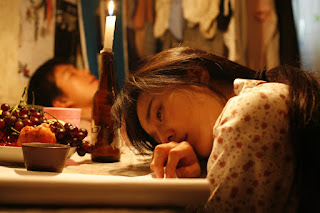 Lost in Beijing (2007)
Drama; China
112 minutes
I don't have a whole lot to say about "Lost in Beijing" except that you need to see this motherfucker, stat! It's a very understated movie on the surface, but it packs a lot of unexpected turns into it's unassuming facade.
The story centers around two couples dealing with the fallout of a workplace rape, the unplanned pregnancy resulting from it and the attempted blackmail resulting from that. The handheld cinematography is top notch and the way the director captures the city and all it's many anonymous nooks and crannies on film really draws you into these characters' reality. It's a beautiful, but also incredibly engaging and entertaining film about naivety, hopelessness, desperation and the lengths people will go to for the sake of their own pride. Usually when people describe movies like that they sound wanky and overly emo, but "Lost in Beijing" manages to deal with some pretty angsty subject manner in a way that doesn't make it cheesy or heavyhanded.
Give this some time if you're into: Down to earth, sometimes unflatteringly honest filmmaking, Wong Kar Wai's films, movies that get banned in their own country, shaky cam -
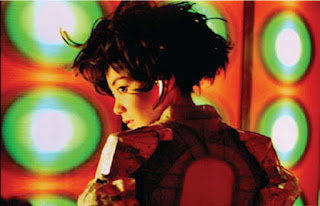 2046
2046Sometimes the best sci-fi is barely sci-fi at all
Here in the good ol’ US of A we’ve come to equate sci-fi with big action, blockbuster summer movies to the point that you really don’t see the genre getting much attention outside of that department. Ever since “Star Wars”, we’ve been accustomed to stories that focus mainly on explosions, alien invasions, special effects-laden chase scenes and lone wolf superheroes that save the galaxy. I can only guess that’s why people seem to scratch their heads when I tell them that my favorite sci-fi movie of the last decade is a Chinese art-house film set in the 1960s called “2046”.
“That’s a sci-fi movie?” people ask me when I recommend it to them and at that point I must admit that no, it’s not strictly sci-fi, but it’s still the best sci-fi movie I’ve seen in a long, long time.
“2046” is a complicated movie on many fronts. First of all, it is a sequel to director Wong Kar-Wai’s earlier film “In The Mood For Love", which itself is a spiritual successor to one of his first films, “Days Of Being Wild". But unlike most sequels, it’s not necessary at all that you see either of these previous films to enjoy “2046”. All you need know is that the main character in “2046”, Chow Mo-wan (Tony Leung) is a genre writer/journalist who used to rent an apartment, #2047, next door to a woman named Su Li-Zhen (Maggie Cheung), who occupied #2046. Both characters were married with spouses that were always away on business and after becoming close friends, they began to believe their spouses were both cheating on them. As a result, the two of them have a very awkward affair in which they never actually consummate their relationship for fear of being guilty of what they accuse their spouses of and then eventually part ways, never fully succumbing to their feelings for each other.
“2046” takes places years after their parting, in swinging 1960s Hong Kong where Chow Mo-Wan is now masking his woes with a flamboyant playboy lifestyle. He spends most of his nights in clubs, drinking booze and chasing a new woman each night.
Now I know what you’re saying – “Chris, this sounds great and all, but where the hell does this get sci-fi?” Well, through all of this, Chow is still a writer and the story he’s crafting in private is set in a far off futuristic world called 2046 (pronounced two-zero-four-six), contrary to the popular belief that the title refers to the film taking place in the year 2046, which isn’t the case.
In Chow’s story, 2046 is a mysterious place where nothing ever changes and so there is never any loss or sadness. Lost souls often travel there to reunite with loved ones and the common trend is that people who go to 2046 rarely return. However, the story’s main character Tak is returning because somehow (that’s not explained in the story), he lost the woman he loved in 2046 and now must take the long, cold train ride back home. If you’ve ever seen Leiji Matsumoto’s classic anime series “Galaxy Express 999" – that’s what this train to/from 2046 reminds me of, though how it works and whether 2046 is a place on Earth or another planet or another dimension is never explicitly stated in the movie.
Throughout the film’s different sections set in the ‘60s, Chow meets many women and encounters many scenarios that remind him of his own experience with Su Li-Zhen in room 2046 and those experiences inspire the story he’s writing. The story is also how he analyzes and processes many of the emotions he’s feeling and tries to make sense of them all. Characters in the story mirror people in Chow’s life and are often portrayed in the story world by people from his real life.
The beauty of “2046” is that it is one of the best portraits of an artist ever committed to film. This is a film that can be read many different ways and given so many meanings, but to me the most brilliant aspect is the way it weaves Chow’s life into the lives of his characters and how he uses those characters as a way to outwardly express things in his life that he himself is incapable of expressing or even understanding fully. In a way, that’s what makes this movie so purely sci-fi, even when it’s not.
Sci-fi is all about being able to dissect and discuss hot-button issues in a safe, removed environment. Since the dawn of the genre, authors have always used the banner of science fiction to address concepts that would otherwise prove too touchy to address head on – racism, sexism, the effects of capitalism, of oppression, pollution, the ethics of science, etc. 2046 is Chow’s way to dissect the hot-button issue in his life, which ultimately keeps coming back to his would-be affair with Su Li-Zhen, how he chose to deal with that event in his life and how that choice has come to dominate much of what was to come for him.
Conceptually, the film is incredibly dense with many of the characters speaking different languages to each other, further representing the artificial walls that divide us from each other and the obstacles that stand between two people and a potential relationship. The story cuts between different periods in time, different cities and different characters who sometimes share traits with other people in Chow’s past that draw him to them. Through it all, the common theme that arises is the idea that people often experience events in their lives that stay with them forever and mold who they become from that point on, whether directly or indirectly, and that attempting to dwell on those moments and live in them forever only invites sorrow, loneliness and pain into one’s life.
Though I’m just as much a sucker for huge CGI explosions and high-octane gobbledygook as the next guy, it’s rare that I discover a movie that delivers that same “wow factor” in the form of good, old fashioned storytelling. To me, the goal of any great sci-fi is to make your mind wander, to make you think about things that you might have never considered and to present things you’ve already considered in a new and amazing light. That’s the feeling I get from “2046”. It makes me think about the nature of human relationships - how we use people for our own needs, how we can stare at something every day of our lives and never actually see what’s there until we experience something seemingly unrelated that makes us reevaluate it. It makes me ponder how we go through our lives re-inflicting ourselves with the same trauma again and again, subconsciously punishing ourselves for the choices we’ve made, the paths we’ve taken, the mistakes we can identify in hindsight.
With all that said, you’ll still probably have to watch this movie two or three times before you really start to get it. There’s a lot to take in and you’ll want to consume it all, which will unfortunately prevent you from really grasping all the film has to offer on the first go.
Visually, this is one of the most beautiful films ever made. Each shot is a work of art, full of vibrant color, deep shadow and intriguing composition thanks to Wong Kar-Wai’s long time collaborator, the brilliant cinematographer Christopher Doyle. Fans of “Blade Runner” will surely be in awe of the mood this movie sets with its visual style alone. The costumes are amazing, the settings feel gritty and stylized all at once and the soundtrack only adds to the spooky, lonesome quality of the character’s personal and fictitious journey.
“2046” is truly an amazing film that reveals more and more with each viewing and though it’s not strictly sci-fi from start to finish, it uses the genre more effectively than most films we deem sci-fi these days. It’s likely that you will have a completely different interpretation of the film than I have, which is something else I love about it. It’s a film that forces you to draw the connections yourself and determine their significance through metaphor or poetry. It’s a challenging movie to grasp, but ultimately a very rewarding one as well. In my book, it’s one of the most profound sci-fi films of all time, worthy of standing next to “Blade Runner” or “2001: A Space Odyssey”…and there ain’t a gun, spaceship or explosion to be found. -
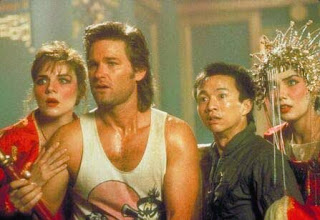
big trouble in little china
its all in the reflexes.
______________________________________________________________
it's a dark and stormy night here in san francisco (well, technically it's the middle of the afternoon, but that's just semantics at this point). it's been raining heavily over the last week, streets flooding, power dying, cars crashing left and right. to put it plainly, it's a madhouse out there and it got me thinking - what would ol' jack burton do at a time like this? when the earth quakes, the poison arrows fall from the sky, and the pillars of heaven shake...what would he say?
john carpenter has unleashed many brilliant creations on the world, from his masterful reinvisioning of the thing to the gritty, futuristic dystopian escape from new york to the ever-so-slept on, but amazingly strange prince of darkness. few, however, can hold a candle to the profoundly hilarious and ingeniously zany big trouble in little china. let's just establish this right now before we go any further - kurt russell is a fuckin' genius. no ifs, ands or buts about it - just. plain. genius. if you don't agree, you're either a total poser that's never seen any of his movies or some stupid whore that's probably obsessed with matthew mcconaughey or something. regardless, your opinion means nothing.
i often find myself watching movies and thinking "this would have worked so much better if kurt russell was playing that guy". for instance, we all remember that flaming heap transformers, right? now, there really wasn't anything short of a global outbreak of alzheimer's that was going to save that rag, but just imagine if the part played so awkwardly by john turturro was instead played by kurt russell. eeeeehhhh? see what i'm sayin'? not good, but still much better, right? i don't know what it is about him, but his mere presence can elevate a movie above mediocrity. i don't know where he learned those acting chops, but my hunch is that it must have been from jesus himself. i know i'm hamming it up a bit, but i'm not being sarcastic. watch 'big trouble' again and try to imagine anyone else being able to pull that role off. imagine if dolf lundgren played jack burton. or bruce willis. sly stallone. arnold. these hot shots think they're holywood royalty, but are they worthy to even lick the ground kurt russell walks on? imagine tom cruise's sissy ass saying "son of a bitch must pay". you can't because it's just totally wrong. he'd say it all ratty-like, as if someone had just befouled the holy name of xenu. not only that, he probably would have looked like an idiot in those acid washed jeans.
anyway, i'm getting a little off track here. i'm supposed to be talking about one of my favorite movies of all time, so i should get to it. a lot of people just don't quite get 'big trouble in little china'. i can't blame them - it's weird and goofy and you're never quite sure if what you're watching is real or if you fell asleep halfway through the movie and your imagination concocted some outrageous, totally implausable dream world where every word out of every character's lips endlessly tickles your funny bone for no clear reason and the alleys of chinatown are magically big enough to drive semi trucks through. it's a damn weird movie and i get the feeling that the average joe just has no idea how he's supposed to process it. "wait a second...is this for real?", "is this movie really racist?", "why is he talking like that?", "did they really wear boots like that in the 80s?".
not me though, i get it. i get every single line, every single subtle detail to the point where i probably laugh at things that aren't even jokes just because i get this damn movie so much. it's one of those films that gets it right in every way possible. the performances are just over-the-top enough to make the gags work, but not so much that it becomes a spoof. obviously it's a parody of those old charlie chan type movies, but carpenter handles it in such an interesting and comical way that it's not offensive or racially insensitive. jack burton is the perfect clueless action movie oaf that simultaneously thinks the world of himself and is delightfully surprised whenever he's actually able to back up all his big talk. not to mention kim cattrall's criminally overlooked performance as gracie law, a young, conscientious civil rights lawyer that has a serious problem with her face.
the thing i love most about 'big trouble in little china' is the way it comments on how american society is still incredibly racist, ignorant and biased toward other cultures, whether they know it or not. anything more than a passing glance at the film reveals that while kurt russell's name is first and foremost on the credits, jack burton is far from the hero of the story. in fact, the film flips the tables in a really interesting way. wang chi, played to hilarious effect by dennis dun is the true hero in 'big trouble' and jack is his witless sidekick who is just tagging along to cash in on a bet. jack, who is a big man in his own little pool of truck-drivin' CV radio personalities, is of little or no consequence to the inhabitants of san francisco's chinatown. the "weirdness" of their culture persists and amplifies only because of his ignorance toward it. carpenter derives comedy from the sheer ridiculousness of the film's portrayal of chinese-american life and how little the average american actually knows about the culture. but, in pointing out this dilemma, 'big trouble' is also bittersweet, for it calls into focus the bias' of hollywood as a whole. dennis dun, donald li and victor wong all gave great performances in this film as well as carpenter's 'prince of darkness' and should by all accounts have gone on to at least have decent careers on the c-list, but what became of them? not a whole lot. it's painful to me to see the great things that can happen when hollywood isn't culturally backwards, only to be pulled violently back to the reality of the situation - these great actors are going to forever be relegated to playing nameless henchmen in the background of movies that have something vaguely to do with asians. the world may yet remember the immortal advice of jack burton on matters of importance such as how to conduct yourself when accosted by a grabby thug or how to respond when your old lady is on your case about driving too fast, but will they remember even a line of what egg shen said?
Showing posts with label china. Show all posts
Showing posts with label china. Show all posts


Subscribe to:
Posts (Atom)